
The deed
Describe what the party actually did.
One deed. Several viewpoints.
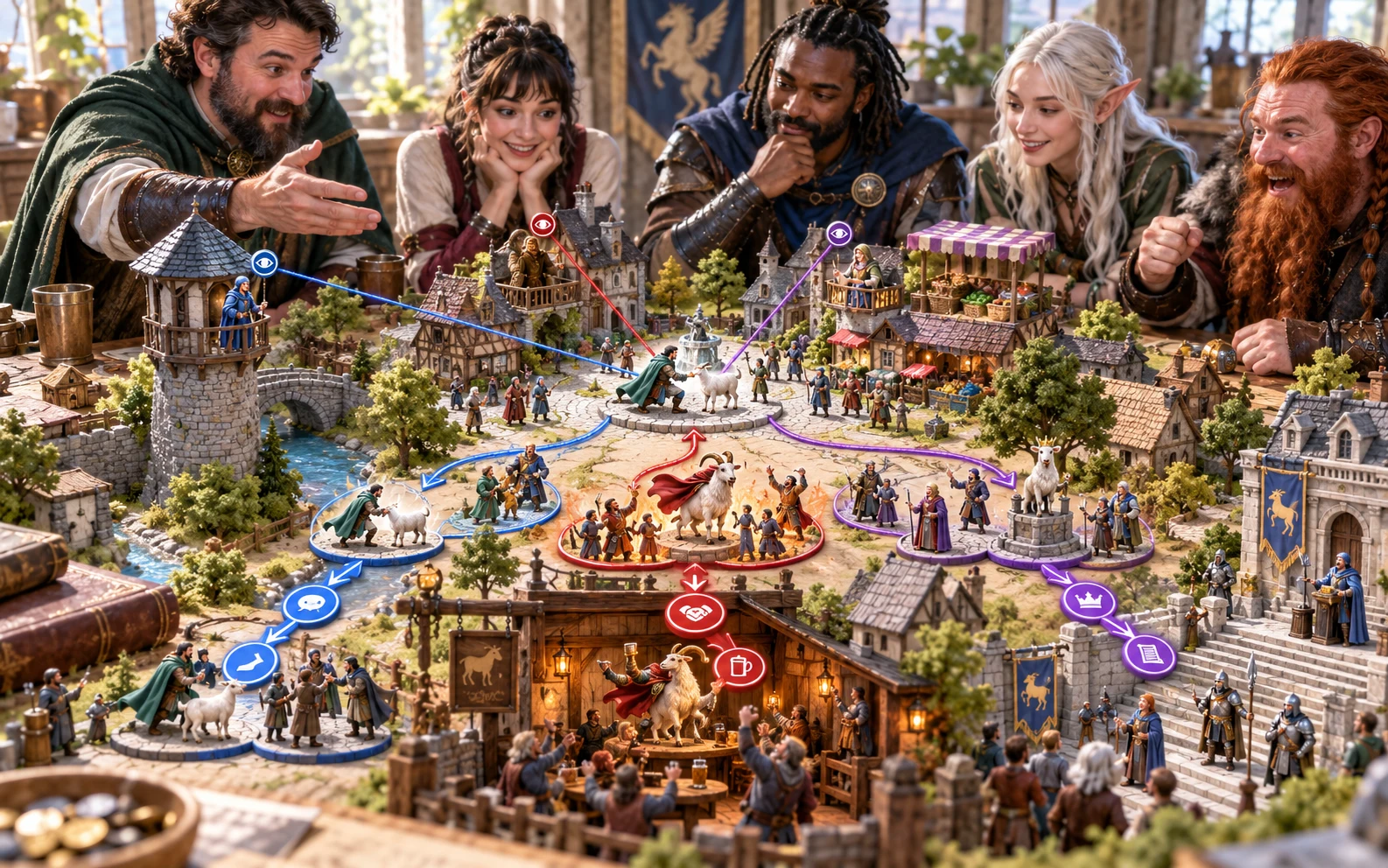
Develop distinct accounts of one party deed, following what witnesses saw, what they believe and how their story spreads.

One deed with several accounts
Give witnesses distinct viewpoints and leave the party choices.
Describe what the party actually did.
Create one to three people with different viewpoints.
Separate observation, clarity and belief.
Follow the story and possible responses.
Set the deed and its viewpoints
The illustration represents witness viewpoints, not an application screenshot.
Describe the party’s deed, kind, context, location and public reach.
Add first witness, clarity, things to avoid and private context for review.
From the deed to the story that leaves the scene
Build the accounts before following their retellings.
Set kind, context, location and reach.
Review position, visibility and mistaken details.
Consider three stages and the repeated version.
Review possible consequences and three responses.
Your witness and retelling workspace
Separate what each person actually saw from the account they take away.
Begin with the event your party brought about.
Choose strange, heroic, magical, kind and more.
Give each person a distinct position and viewpoint.
Separate what was seen from what was understood.
Follow how the repeated story changes and travels.
Consider ways to handle the spreading account.
Edit, lock sections and reopen sighting records.
Copy, download or print DM or player-safe material.
Quick foundations and deeper sighting context
Add the details that shape what each person could actually see.
Set deed, kind, context and public reach.
Choose how clearly the event was seen.
Name who saw it first and the location.
Add things to avoid and details for DM review.
Refine a useful sighting record
Keep useful viewpoints while developing the repeated story.
Review and refine individual details.
Lock useful sections and change others.
Save and revisit versions of the sighting.
Review viewpoints, spread, consequences and responses.

A sighting ready for the table
Review each witness’s viewpoint, clarity, belief and next action.
Follow three stages of spread, the repeated version and possible consequences.
Review private truth and witness details in the selected sharing view.
Word of mouth with choices still open
Use witnesses and retellings as material for play.
A witness may miss or misunderstand details.
Keep the accounts tied to the event.
Leave the party’s response and lasting reputation open.
Do not start, alter or hand off combat.
Generator access and pricing
Choose access for this selected generator or an eligible pack.
Review current standalone access and pricing.
Check whether a current pack includes this generator.
Use your account to review premium product access.
Create a free VISINVOKE account; premium access remains separate.
VISINVOKE means value
Bring distinct viewpoints, fallible observations and retellings together.

Keep the accounts tied to the party’s event.
Develop one to three positions and viewpoints.
Reopen sightings and revisit saved versions.
Consider ways to handle the story without forcing punishment.
Explore your VISINVOKE workspace
Each card opens its own product website. Review purpose and access separately; related products do not promise included access or automatic synchronisation.

Open your VISINVOKE desktop products.

Prepare a live exchange after an established social mistake.

Build the wider setting around your campaign.

Develop the places your party travels through.

Explore separate adventure environments.

Explore separate fantasy image creation.
Product artwork is illustrative, not application screens or actual generated image output.
Quick answers
Understand viewpoints, spread and reviewed table views.
Develop a party deed into one to three distinct witness accounts, three stages of spread and three ways to respond, separating what was seen from what people believe. Review each witness’s clarity, mistaken details, belief and next action, the repeated version, possible consequences and private truth.
The eight deed kinds are strange, illegal, embarrassing, heroic, magical, secret, violent and kind. Choose among eight play contexts and six levels of public reach, from a private sighting to a story everyone knows.
Prepare one to three distinct witnesses. Describe where each stood, what they actually saw, how clearly they saw it, what they believe happened and what they do next. Observation can be incomplete or mistaken; an account is not automatically perfect evidence.
Quick sets what the party did, the kind of deed, context and how far the story may travel. Deep adds how clearly it was seen, who saw it first, location, things to avoid and private context.
Edit, lock and change individual sections, save versions and reopen sighting records. Review witnesses, viewpoints, clarity, belief, spread stages, repeated version, possible consequences and responses for your table.
Follow three stages of spread and three ways to respond. Players choose whether to clarify, redirect, ignore or leave the story alone. Copy, download or print the full DM or player-safe view, reviewing witness details and private truth before sharing. The generator does not change lasting reputation, start or alter combat or hand off to Combat Pro. Open it in Desktop Command Centre and review current account access.
Continue in VISINVOKE
Create a free VISINVOKE account and review current generator access.
Use your account installer page for Desktop Command Centre.
Open Someone Saw That Generator from the Generators collection.